Things now are a little different from the last time I saw Mr. Chalabi, in June 2004. Then, I had to break away from a military delegation headed by Deputy Defense Secretary Paul Wolfowitz. The "one-time Pentagon favorite"--what a risible journalistic cliché that's become--wasn't even on official speaking terms with the arch "neo-con" as a result of a National Security Council directive aimed at "marginalizing" him. This meant raiding Mr. Chalabi's home, holding him (unarmed) at gunpoint, and the filing of trumped-up charges against him by a Bremer-appointed judge who has since been dismissed from his job by Iraq's judicial authorities for unethical conduct. Improbable allegations that he somehow obtained and then passed sensitive U.S. information to Iran (another anonymously sourced story Newsweek really ought to revisit) had also appeared. The would-be coup de grace occurred once interim Prime Minister Allawi took power and U.S. forces began stripping Mr. Chalabi's guards of their weapons and permits to carry them. If this was "marginalization," Mr. Chalabi could have been forgiven for wondering if his elimination was the real intention.
But then something unexpected--at least to Mr. Chalabi's detractors--happened. He stayed put. The CIA line was that he was a mere dilettante, who'd give up when the going got rough and retreat to his "five-star hotels" and "Savile Row suits." Indeed, how could it be otherwise, given that he had "no support" in Iraq? But that assessment, like so much else, was part of the CIA's larger Iraq intelligence failure.
Monday, August 29, 2005
Ahmed Chalabi: Iraq's "Comeback Kid"
Robert L. Pollock writes about the return of America's onetime ally in Iraq in today's Wall street Journal:


Sunday, August 28, 2005
Venezuela News And Views on Pat Robertson and Chavez
At Venezuela News And Views, Daniel comments on the Pat Robertson controversy. He doesn't want Chavez dead, he wants him put on trial, and Robertson to shut up.
How Not to Make Friends and Influence People
The Russians detained Senate Foreign Relations Committee Chairman Richard Lugar and members of his committee in Siberia, for several hours against their will, according to Jeff Zeleny's article in the Chicago Tribune.
This story is news because, usually people in Washington suck up to the Chairman of the Senate Foreign Relations committee, they don't take him prisoner. I guess this story might be seen as a case of a more traditionally Russian approach to lobbying Congress. On the other hand, TSA security guards once made Congressman John Dingell drop his pants during an airport search, so who knows what else has gone on stateside?
BTW, the Russians say that they don't think this incident will affect US-Russian relations...
PERM, Russia -- The chairman of the Senate Foreign Relations Committee and a U.S. delegation that included Sen Barack Obama (D-Ill.) were held at an airport here for three hours by local officials for unexplained reasons.
After several heated discussions and calls between officials in Perm and Washington the situation was resolved and Russian officials returned the delegation's U.S. passports.
Russian officials offered no explanation for the detention but one border guard did apologize through an interpreter.
Bill Burns, the U.S. ambassador to Russia, interceded to resolve the situation. The delegation was set to travel to Kiev, Ukraine.
The White House, the Secretary of State and the Pentagon's National Military Command Center in Washignton were involved, U.S. officials here said, and contacted counterparts in Moscow attempting to resolve the situation. Earlier Sunday., Sen Chuck Hagel (R-Neb.) was detained for about four hours as he tried to fly from a different Russian airport.
This story is news because, usually people in Washington suck up to the Chairman of the Senate Foreign Relations committee, they don't take him prisoner. I guess this story might be seen as a case of a more traditionally Russian approach to lobbying Congress. On the other hand, TSA security guards once made Congressman John Dingell drop his pants during an airport search, so who knows what else has gone on stateside?
BTW, the Russians say that they don't think this incident will affect US-Russian relations...
Lenin's Mistress
I ran into the story of Lenin's mistress Inessa Armand by accident, while googling something else. After living in Moscow and Tashkent, it was so interesting, that I can't help linking to Michael Pearson's 2001 article in the Guardian, adapted from his biography, Lenin's Mistress.
The Observer: Dismay Over Iraq Constitution Mess
The Observer reports: "Despite attempts to put an optimistic gloss on the talks, the failure of Iraqi politicians from the three main groups to reach any kind of consensus has been greeted with dismay in Washington and London, where it had been hoped that President George W Bush's intervention last week to persuade the Shias to accommodate the Sunnis' concerns would break the deadlock."
Paul Lawrence Dunbar Reconsidered
Jabari Asim discusses Shelley Fisher Fishkin and David Bradley's new anthology of Paul Lawrence Dunbar's writings in today's Washington Post Book World:
The last section of the book is devoted to The Sport of the Gods , which seldom packs the punch of Dunbar's best short fiction. It is mostly of interest because it is the only Dunbar novel to feature a largely black cast, not at all surprising when one considers his determination to "be with the age." The plot revolves around the Hamiltons, a black family that flees the South after its patriarch is falsely accused of theft and sentenced to 10 years of hard labor. Without Berry, the head of their household, the Hamiltons fall prey to vice, lust and violence up north in New York.
With the exception of a pair of supporting players, the characters in The Sport of the Gods seldom rise above mere types employed in the service of the author's larger design. This is consistent with Dunbar's approach to storytelling. He wrote to his wife, Alice, "I believe that characters in fiction should be what men and women are in real life -- the embodiment of a principle or idea. . . . Every character who moves across the pages of a story is, to my mind, . . . only an idea." The prevailing idea here echoes themes that Dunbar addressed with some passion in essays such as "The Hapless Southern Negro" and "The Negroes of the Tenderloin." In the latter he cast his sensitive gaze on the development of dysfunctional black ghettoes and concluded, "The gist of the whole trouble lies in the flocking of ignorant and irresponsible Negroes to the great city," an influx that "continues and increases year after year." Joe, Berry's headstrong young son, who comes to no good, symbolizes the futile migration that Dunbar lamented. Chronicling Joe's sordid ordeal, Dunbar's omniscient narrator mentions "the pernicious influence of the city on untrained negroes" and predicts that "the stream of young negro life would continue to flow up from the South, dashing itself against the hard necessities of the city and breaking like waves against a rock."
It is tempting to regard Dunbar's implausibly tidy ending as a bit of wishful thinking. Fishkin and Bradley remind us that Dunbar was dying of tuberculosis as he wrote the novel. Better, perhaps, to read the story's conclusion as evidence that he had not lost faith in his brethren, despite the many opportunities for cynicism and despair with which his short life had presented him. At times he did feel obligated to offer such reassurances. "I do not write as a malicious croaker," he asserted in one essay, "but as one deeply interested in the development of the best that is in the negro."
Saturday, August 27, 2005
More on India...
From our long-term linked blogger friend Prashant Kothari. He's just started a website devoted to the Indian Economy, called IndianEconomy.org...
The Gutter
My sister-in-law is visiting. She's a city planner, she knows I'm a blogger, and so she recommended readingThe Gutter for its discussion of New York's planned replacement for the World Trade Center. Apparently, it's widely read by architects and planners, among others...


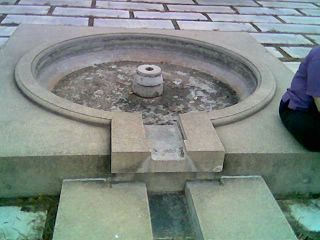
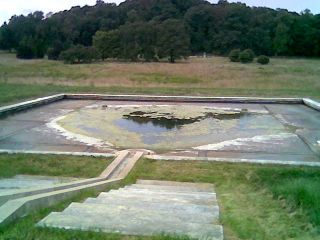
What is going on at the National Arboretum? We went there yesterday, and while some of the exhibits were nice--such as the Bonsai house, herb gardens, and such--there were signs of neglect. Unmown lawns gone to seed, empty fountains, unkept trails, and loose stones. And in some areas, the sprinklers were on during the day, subjecting visitors who wanted to walk among the trees and flowers to a soaking. It is still beautiful...but really does need proper attention.
Friday, August 26, 2005
India on My Mind...
India is on my mind, these days. The Indian head of state was in DC getting all sorts of attention from President Bush, not long ago. Last week, I saw Bride and Prejudice, I have a couple of students from India in my course, as well as a number of IT professionals who have gone back to school after their jobs moved to Hyerderabad and Bangalore. The other day, I had coffee with a couple we met in New Dehli, who were stopping by DC on their way back home to Australia. They recommended I read Being Indian: They Truth about Why the Twenty-First Century Will be India's. The author is an Indian diplomat who once headed the Nehru cultural center in Moscow, and now runs the same operation in London. While it is not a done deal, it certainly sounds like India is on the move...
Thursday, August 25, 2005
Exit Roman Abramovitch
RIA Novosti's Peter Lavelle says the oligarch owner of Britain's Chelsea football club is on his way out of his Russian oil business--because he's selling out to the Kremlin:
The sooner Gazprom acquires Sibneft, the better for the Kremlin. With Russia's 2007-2008 election season approaching, buying out Abramovich now will give the Kremlin more time to deal with the political fallout. Additionally, the authorities will be able to spin paying billions to a billionaire as evidence of the state's respect for private property rights - 'the days of stealing assets are in the past.' This may not be completely convincing to an average Russian who dislikes the oligarchs, but it may do wonders to strengthen Russia's investment case.
The Iraq-Al Qaeda Connection (continued)
In the Weekly Standard, Ed Morrissey connects some more dots that link Mohammed Atta to Saddam Hussein:

...after 9/11, Czech intelligence privately told the United States that it had evidence that al-Ani met with Mohammed Atta on April 9, 2001. Later, the Czechs went public with the information--and to this day, the Czechs insistently stand behind this intelligence. Part of the reason for this insistence is not just a belief in their source, but also a corroborating entry in al-Ani's datebook, which the Czechs apparently discovered during a surreptitious search of the Iraqi embassy after Saddam's fall in April 2003. The datebook contained an entry for an April 2001 meeting with a "Hamburg student," the same description used by Atta himself when applying for his visa. (It is perhaps worth noting that Epstein is the only person to have reported on the existence of this daybook.)BTW, On his 9/11 website, Epstein also makes a persuasive argument that the anthrax attacks may have been linked to the attacks on the World Trade Center and Pentagon.
However, the 9/11 Commission disregarded the Czech intelligence and declared that Atta had never gone to Prague in April 2001. How did the Commission reach this conclusion?
Senator Kennedy to Block Roberts Nomination
That's Robert Novak's prediction in today's Washington Post. Novak points to the return to Kennedy's staff of James Flug, a 66-year old retired lawyer who, as a young Kennedy aide, helped stop the Carswell and Haynsworth nominations during the Nixon administration. Prepare for a "Borking" of Bush's Supreme Court nominee . . .
Wednesday, August 24, 2005
Britain's List of Banned Behaviors
Little Green Footballs led us to this interesting list from the Home Office, published in The London Times, that describes the kind of actions that, after the July 7th bombings, will result in deportation from the United Kingdom:
Terrorist violence
Cannot foment, justify, glorify terrorist violence in furtherance of particular beliefs
Terrorist acts
Cannot seek to provoke others to terrorist acts
Criminal acts
Cannot foment other serious criminal activity or seek to provoke others to serious criminal acts
Inter-community violence
Cannot foster hatred which might lead to inter-community violence in the UK.
Method
Individuals who do the above by any means or medium are caught by the legislation, including:
- writing, producing, publishing or distributing material;
- public speaking including preaching
- running a website
- using a position of responsibility such as teacher, community or youth leader
War, Revolution and British Imperialism in Central Asia
No, it's not about International Crisis Group's work after the breakup of the USSR, rather Frederick Stanwood's 1983 book, based on documents from the Foreign Office and other primary sources, explains Britain's policy in the Caucases and Turkestan roughly from 1914-1922. The war in the title is World War I, the revolution is the Bolshevik revolution, and British imperialism involved a very real British Empire (colored red on the maps).
That said, the fascination of this historical study is that it is demonstrates the cliche that even paranoids have enemies. For in the wake of World War I, not only did Britain peel off bits of the Ottoman Empire, drawing the lines in the map for today's Middle East and Balkans; Britain also had plans to break up the Russian Empire and take bits of it as well. The places mentioned in British policy memos from 1918 read like today's headlines: Georgia, Azerbaijan, Trans-Causasia (Chechnya), Dagestan, Armenia, Turkestan (today's Turkmenistan, Uzbekistan, Kyrgyzstan, et al.), Persia (today's Iran), Siberia. As today Mesopotamia (Iraq) and Afghanistan play pivotal roles in the proposed forward strategy, designed to take advantage of Russia's weakness due to revolution and civil war. Russia itself was to be divided in two--an Eastern Siberian republic, with its capital in Omsk, intended as an ally of Britain against a Western Russia that stopped at the Urals. A series of British allies in Turkestan and the Balkans would form a "cordon sanitaire" around the Bolshevik revolution, containing it from spreading to other countries (George Kennan didn't come up with the strategy of containment, it turns out). Britain would obtain a League of Nations mandate to administer a protectorate in Georgia and other such small countries--eerily reminiscent of Lord Patten's position as UN administrator of Kosovo today (Patten is chairman of the International Crisis Group,). These small, weak buffer nations ringing Russia would have been dependent on British financial support. Muslim leaders and white Russians were seen as the natural allies of the British against the Bolsheviks.
Sound familiar?
Anyhow, the policy failed, in part because the British were outfoxed by Lenin, who offered national autonomy to the rulers of Turkestan; and later by Stalin who redrew the maps of both Turkestan and Eastern Europe. And in part because of America. And in part, the author argues, because they didn't know what they were doing. On the British side, only the Government of India (based in Delhi), which opposed the plans and advocated an alternate strategy that sounded a lot like "benign neglect," comes off looking good. One element that really struck this reader was that the British appeared to be equally opposed to both Leninist Bolshevism and "Wilsonian Idealism." They worried that American rhetoric of national self-determination might harm the British Empire, although they preferred an alliance with the US against their perceived enemies at that time: the French and Germans.
Indeed, one might conclude from Stanwood's account that in the aftermath of World War II, it was the the victory of America's Wilsonian Idealism and Lenin's Bolshevism that did cause the collapse of the British Empire. Now, with the collapse of the Soviet Empire, it is almost as if we have returned to 1918, with everything in flux once more. No wonder the Russians are worried that the US and EU want to break up Russia. Because, as Stanwood documents, in the aftermath of WWI, that was indeed official British policy. Perhaps we in the West have forgotten what the Russians remember...
That said, the fascination of this historical study is that it is demonstrates the cliche that even paranoids have enemies. For in the wake of World War I, not only did Britain peel off bits of the Ottoman Empire, drawing the lines in the map for today's Middle East and Balkans; Britain also had plans to break up the Russian Empire and take bits of it as well. The places mentioned in British policy memos from 1918 read like today's headlines: Georgia, Azerbaijan, Trans-Causasia (Chechnya), Dagestan, Armenia, Turkestan (today's Turkmenistan, Uzbekistan, Kyrgyzstan, et al.), Persia (today's Iran), Siberia. As today Mesopotamia (Iraq) and Afghanistan play pivotal roles in the proposed forward strategy, designed to take advantage of Russia's weakness due to revolution and civil war. Russia itself was to be divided in two--an Eastern Siberian republic, with its capital in Omsk, intended as an ally of Britain against a Western Russia that stopped at the Urals. A series of British allies in Turkestan and the Balkans would form a "cordon sanitaire" around the Bolshevik revolution, containing it from spreading to other countries (George Kennan didn't come up with the strategy of containment, it turns out). Britain would obtain a League of Nations mandate to administer a protectorate in Georgia and other such small countries--eerily reminiscent of Lord Patten's position as UN administrator of Kosovo today (Patten is chairman of the International Crisis Group,). These small, weak buffer nations ringing Russia would have been dependent on British financial support. Muslim leaders and white Russians were seen as the natural allies of the British against the Bolsheviks.
Sound familiar?
Anyhow, the policy failed, in part because the British were outfoxed by Lenin, who offered national autonomy to the rulers of Turkestan; and later by Stalin who redrew the maps of both Turkestan and Eastern Europe. And in part because of America. And in part, the author argues, because they didn't know what they were doing. On the British side, only the Government of India (based in Delhi), which opposed the plans and advocated an alternate strategy that sounded a lot like "benign neglect," comes off looking good. One element that really struck this reader was that the British appeared to be equally opposed to both Leninist Bolshevism and "Wilsonian Idealism." They worried that American rhetoric of national self-determination might harm the British Empire, although they preferred an alliance with the US against their perceived enemies at that time: the French and Germans.
Indeed, one might conclude from Stanwood's account that in the aftermath of World War II, it was the the victory of America's Wilsonian Idealism and Lenin's Bolshevism that did cause the collapse of the British Empire. Now, with the collapse of the Soviet Empire, it is almost as if we have returned to 1918, with everything in flux once more. No wonder the Russians are worried that the US and EU want to break up Russia. Because, as Stanwood documents, in the aftermath of WWI, that was indeed official British policy. Perhaps we in the West have forgotten what the Russians remember...
Tuesday, August 23, 2005
Sharansky's Alternative Gaza Plan
He spoke with Newsmax.com about his opposition to Sharon's disengagement strategy:
Sharansky's own roadmap to peace: no concessions, no funds, no legitimacy for the Palestinians unless they adopt democracy. On the other hand, however, hold forth a lush "Marshall Plan" for the Palestinians if they choose the path to true freedom and democracy.
It's a hard line, but Sharansky recalls that it worked like a charm for Ronald Reagan against the Soviet Union - and it would work for Israel against the Palestinians.
"I am convinced that all people desire to be free," Sharansky writes in his latest book. "I am convinced that freedom anywhere will make the world safer everywhere. And I am convinced that democratic nations, led by the United States, have a critical role to play in expanding freedom around the globe."
Subscribe to:
Posts (Atom)